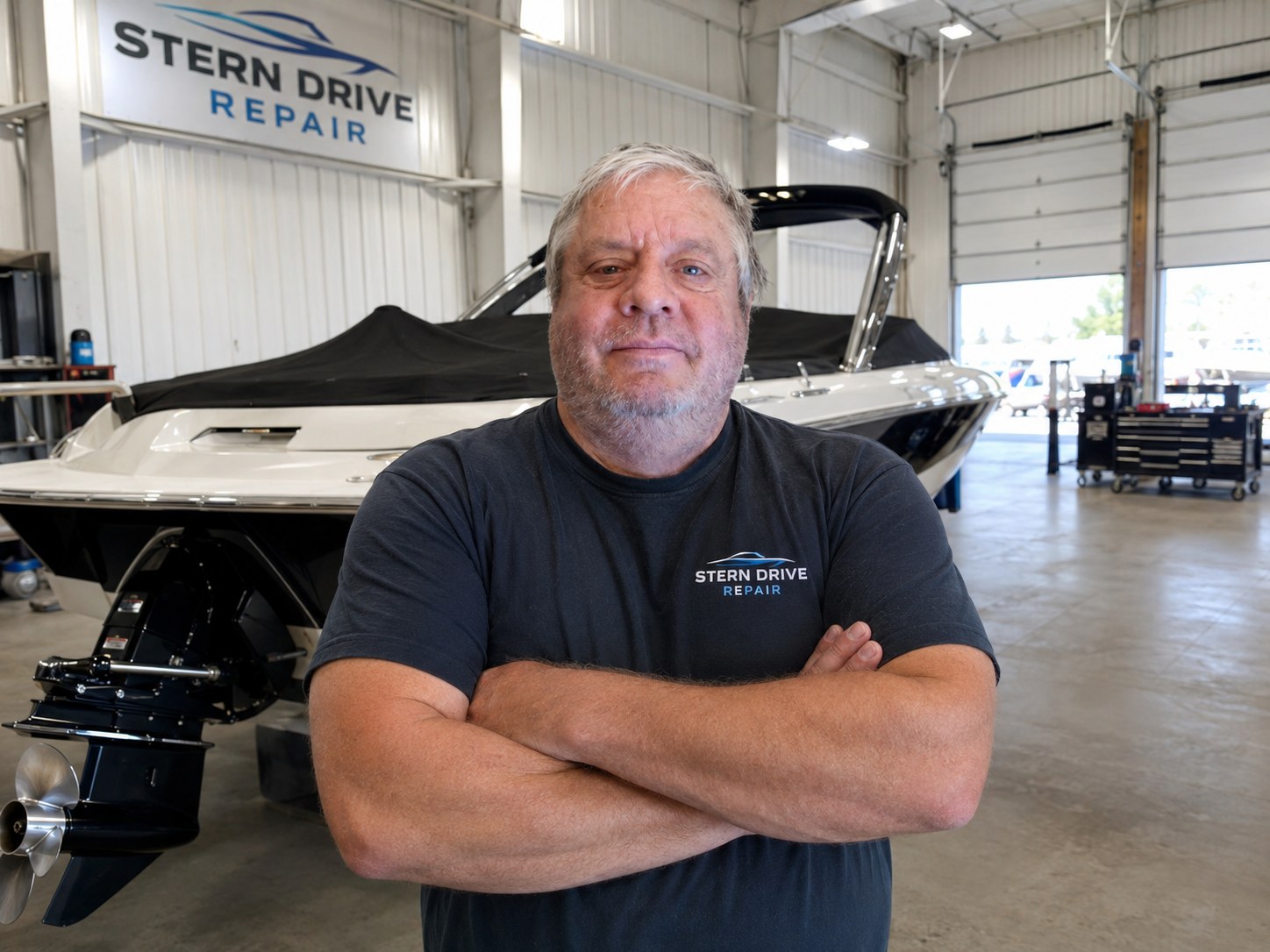
Cobalt boats are built to a high standard and usually ride behind a MerCruiser Bravo or a Volvo Penta drive, sometimes a big single or a Bravo Three. The hull outlasts the drive, so a well-kept Cobalt often needs drive service long before anything else. Brad repairs and rebuilds the sterndrives under Cobalt boats: seals, bearings, gimbal, bellows, shifting and cooling, and full rebuilds when the wear has gone deep. Mail the drive in or drop it off locally.
Cobalt sterndrive problems
- Milky gear oil from a seal leak in the Bravo or Volvo drive
- Transom growl from a gimbal bearing on a heavier hull
- Vibration at cruise on a Bravo Three from prop or bearing wear
- Hard shifting or a drive that pops out of gear under load
- Overheating from an engine-mounted water pump on a Bravo
- Bellows cracks letting water into a boat that gets used hard
What Brad checks on a Cobalt drive
- Identify the exact drive, usually a Bravo or a Volvo unit
- Pressure and vacuum test to find the leak
- Check bearing preload, which matters on the higher-load Bravo
- Inspect the gimbal bearing, u-joints and bellows
- Verify the engine-mounted water pump and cooling flow
- Read the gear oil and check anodes on a saltwater boat
The fix and what to expect
Brad repairs the specific fault on the Cobalt's drive, seal, bearing, gimbal, bellows, water pump or shift, and pressure tests it, or rebuilds the drive fully when the oil and noise call for it. Because Cobalt tends to run the higher-load Bravo, getting preload and shims right is what keeps the drive quiet on a fast boat. You get the wear findings and a firm price after teardown, with a one to two week rebuild turnaround from arrival.
Cobalt hulls tend to run the Bravo, and it shows
Because Cobalt builds heavier, faster boats, they usually sit behind the MerCruiser Bravo rather than the lighter Alpha, and often the Bravo Three with its twin counter-rotating props. That changes the service picture: the water pump is on the engine, not the drive, and bearing preload carries real load, so a Bravo under a Cobalt has to be set up by measurement. A Bravo Three also has more lower-unit bearings and seals than a single-prop drive. Brad sets these up the way the load demands, which is why a fast Cobalt comes back quiet instead of howling at cruise.