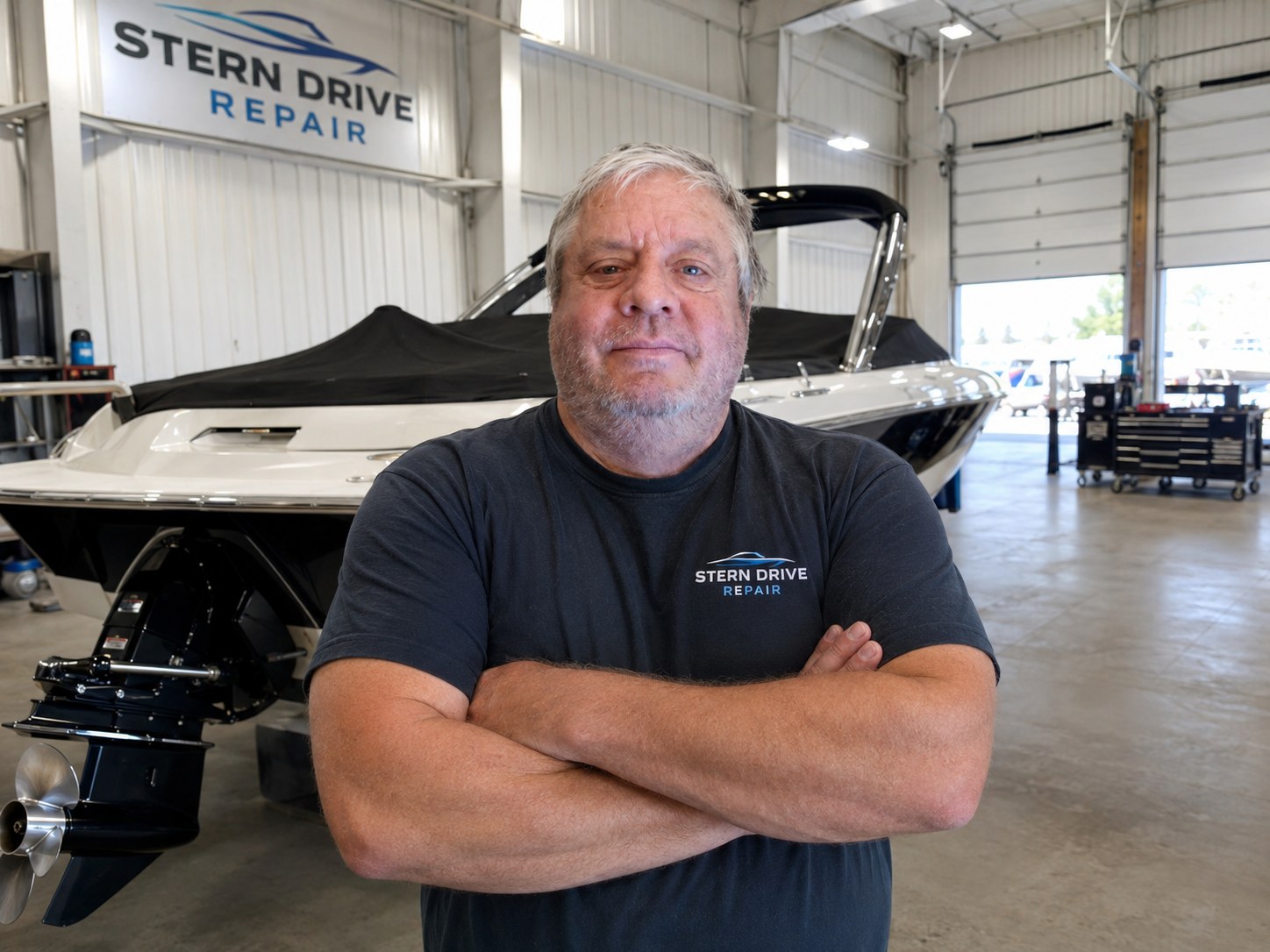
The MerCruiser Alpha One is the most common sterndrive Brad rebuilds, and he knows the Gen I and Gen II inside out. A rebuild strips the drive to the housings, replaces every bearing and seal, checks the gearset and clutch dogs, renews the in-drive water pump, and shims the gears back to the right pattern. It comes back pressure tested and ready to run. Ship an Alpha in from anywhere or drop it off in Central New York.
When an Alpha One is ready for a rebuild
- Gray, milky gear oil that means water has been in the drive
- Metal on the drain plug magnet from worn gears or bearings
- A whine or growl from the lower unit that tracks with speed
- Overheating because the in-drive water pump is worn out
- Play in the prop shaft or a clunk shifting into gear
- A drive that has sat for years and needs everything refreshed
What Brad checks rebuilding an Alpha One
- Confirm Gen I or Gen II, since gearsets and pumps differ
- Pressure and vacuum test to map every leak point
- Inspect the lower gearset and clutch dog engagement
- Check driveshaft, prop shaft and bearing preload
- Renew the in-drive water pump and impeller
- Set shims for the correct gear contact pattern
The fix and what to expect
An Alpha One rebuild replaces all bearings and seals, the water pump, and any gear or clutch dog worn past spec, then shims the gears and pressure tests the drive. You get a written list of what was worn. A well-rebuilt Alpha runs quiet and dry for many seasons. Turnaround is usually one to two weeks from arrival, parts permitting, and Brad calls with the findings and firm price after teardown, before any parts go in.
The Alpha One water pump lives in the drive
The detail that catches people on the Alpha One is the water pump. Unlike the Bravo, the Alpha runs its raw water pump inside the upper drive, so any overheating or weak-telltale complaint on an Alpha almost always means the impeller and pump base are worn. Brad renews the pump as part of every Alpha rebuild because getting to it later means pulling the drive again. The Gen II also uses a larger lower gearset than the Gen I, so on a rebuild he matches the correct bearings and shims to the generation in front of him rather than guessing.